
Seguimos Aquí: 3 Career Lessons I Took From Marta Ronquillo Newhart
November 5, 2026
This internal LatinAPCO session was part of APCO’s Hispanic Heritage Month programming.
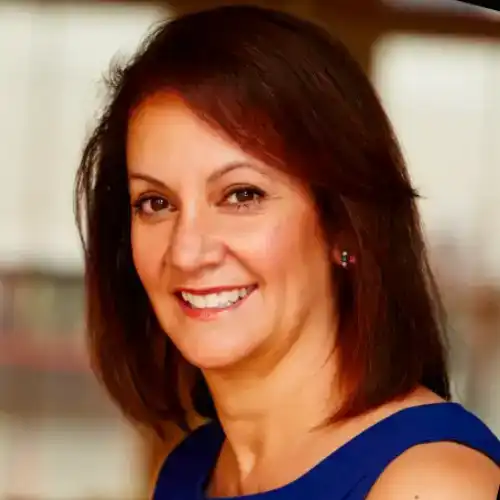
By Ana Paula Figueroa Arredondo in conversation with Marta Ronquillo Newhart
Many of us grew up hearing that hard work is the way forward. I believed it completely, treating it as the whole answer: work hard enough and everything else would follow. My fireside chat with Marta Ronquillo Newhart didn’t take that belief away so much as complete it. Hard work can take you far, she reminded us, but it won’t tell you which opportunities are worth pursuing or who you need in your corner.
This year’s Hispanic Heritage Month theme is Seguimos Aquí, “we’re still here,” and it’s hard to think of a better person to sit across from. Marta is a public company director, has held executive roles at Fortune 500 companies, and is one of the few Latinas in the C-suite. What stood out to me was less about the titles themselves than how deliberately she has thought about each step that led to them.
Here are three lessons that stayed with me the most:
Marta described her early career as a long string of yeses. She wanted to be liked, and agreeing felt like the surest way to get there. As she spoke, I kept thinking about how familiar that pattern is for many early-career Latinos like me, who are often raised to work harder and give more, an instinct that comes from a good place. What Marta revealed is that this instinct can also slowly pull us away from ourselves.
Her career took off when she decided she wanted respect over likability. Once she earned the respect of her team, colleagues and leaders, she stopped agonizing over every word and move. What matters is showing up in a way that serves your colleagues and your company. I had always assumed respect was something you are given once you have done enough. She helped me see it as something you build, often in the moments when you choose not to say yes.
She tied it all back to authenticity, with a question I have carried with me since: “if you’re saying yes to everything and trying to please everyone, are you really being true to yourself?” I don’t have a neat answer yet, but I have started to notice the moments when my yes arrives before my thinking does, and that awareness is already changing how I show up.
For a long time, effort was enough for Marta, until she reached walls that no amount of extra work could get her through. Effort can’t warn you of the mistake you’re about to make, she said; mentors can.
The people she watched reach the next level all had mentors who had walked the path before them and wanted them to succeed. Her own mentor taught her to ask whether a process should exist at all, a habit of curiosity she still brings into the boardroom. That detail stayed with me. I had always imagined mentorship as a series of answers. She described something closer to an inheritance, a way of thinking that keeps paying off long after the conversation ends.
She was clear about what a good mentor looks like: someone honest, even when it stings. She encouraged us to pair mentorship with sponsorship, meaning people who speak up for you in rooms you aren’t in, and with allyship, something she believes Latinos do especially well for one another. I left thinking less about who could help me and more about the kind of relationships I want to build: ones where I show up prepared, take ownership of my own path and offer the same support to the people around me.
“Pressure follows you,” Marta said. It comes from work during the day, from family at night and on weekends—sometimes it settles in your body as a headache.
I recognized that description more than I liked, having often carried pressure quietly. Being the one who holds it together, at work and at home, can slowly become part of who you are, rarely leaving space to ask what that weight is telling you.
What helped her was reframing that pressure as a privilege: a sign she had reached the success she’d worked for and had made her family proud. When her phone rang too much, she would ask herself what she would do when it stopped ringing and people no longer wanted her opinion. Seen that way, pressure became an enabler rather than a burden. Her perspective invited me to see it differently: not as proof that I am falling behind, but often as a reflection of the trust others have placed in me.
Across all three lessons, Marta kept circling back to the same question: what matters? Respect, mentorship, ownership and a healthier relationship with pressure all come down to knowing what matters to you and to the people around you. I came into our conversation thinking about my career mostly in terms of how much I could do, and left it thinking more about what I want that work to stand for, who I want it to serve and the kind of professional I want to become along the way.
That’s the heart of Seguimos Aquí: bringing where we come from into every room we enter, and making sure the people who come after us start from a stronger place.


